
April 20, 2026
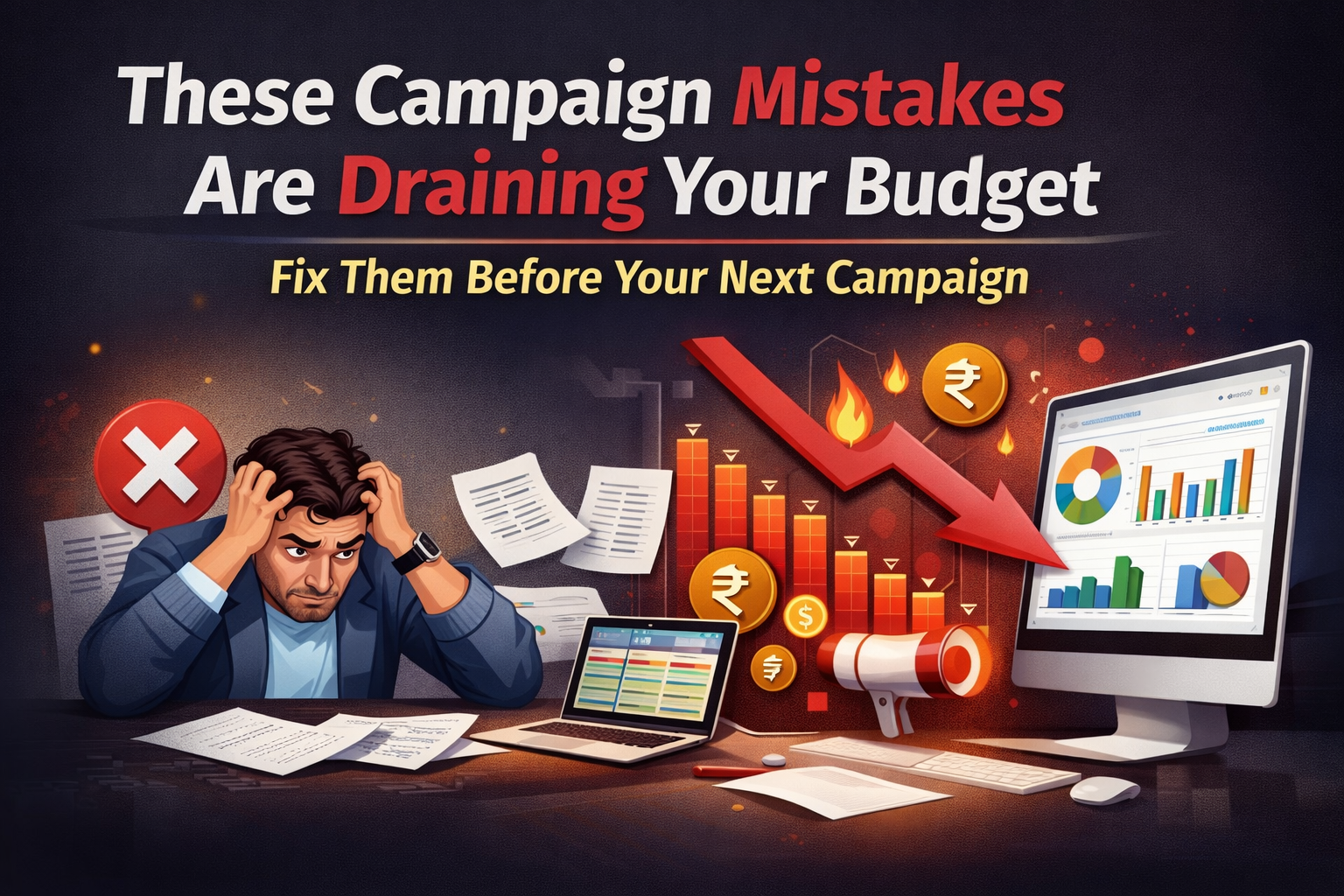
Most marketers don’t realize how much money they’re wasting. Not ?1,000–?2,000…But lakhs per campaign.
The worst part?
These mistakes feel “normal”. Let’s break down the biggest campaign planning mistakes—and how to fix them before your next campaign burns money.
April 20, 2026
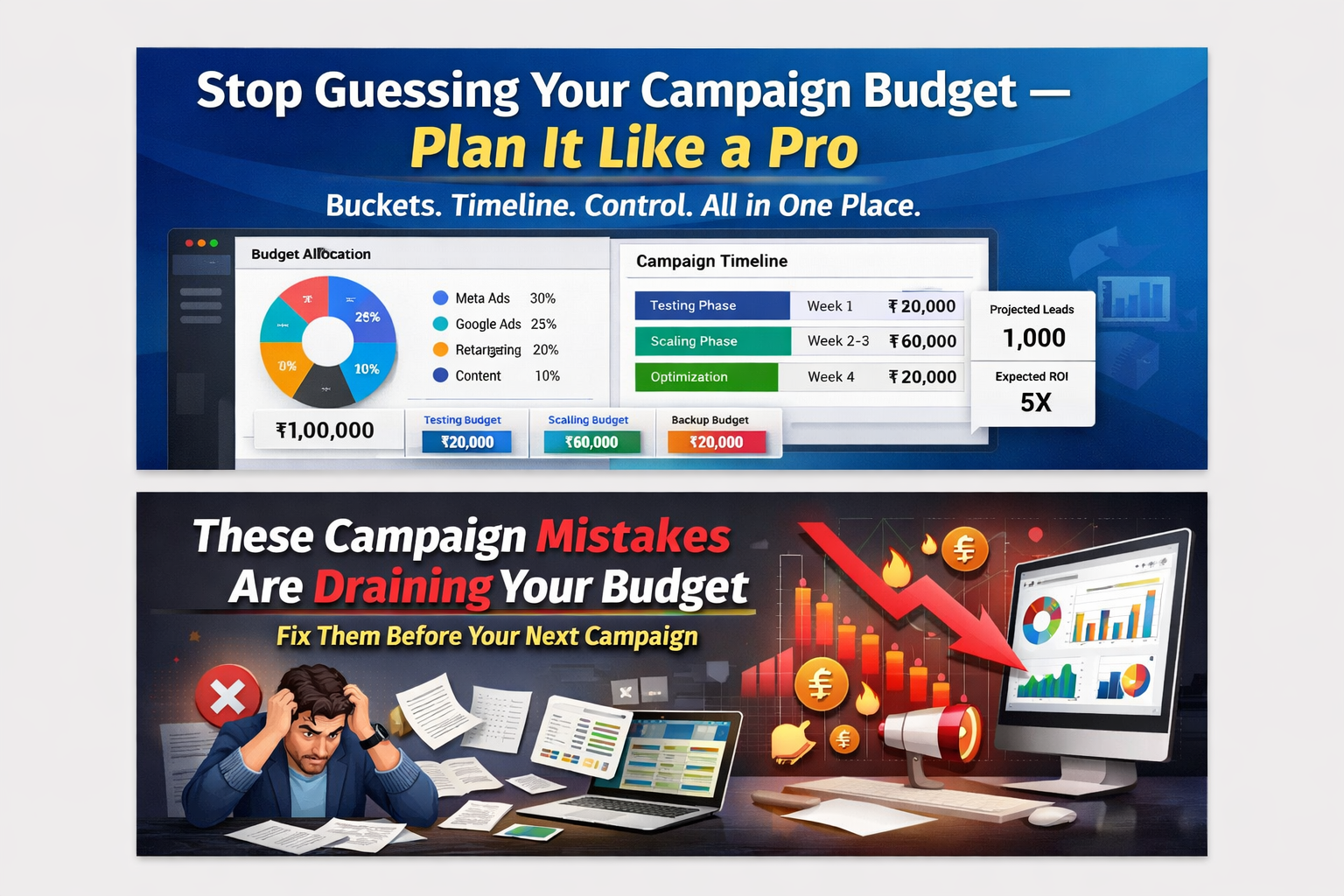
Most marketing campaigns don’t fail because of bad creatives. They fail because of bad budgeting.
Either:
Money runs out too early
Wrong channels get overfunded
No clear timeline for spending
If you’re still using Excel sheets, random estimates, or “gut feeling”, you’re not planning, you’re gambling. This guide will show you exactly how to plan a campaign budget step-by-step, the way agencies and serious marketers do in 2026.
March 28, 2026
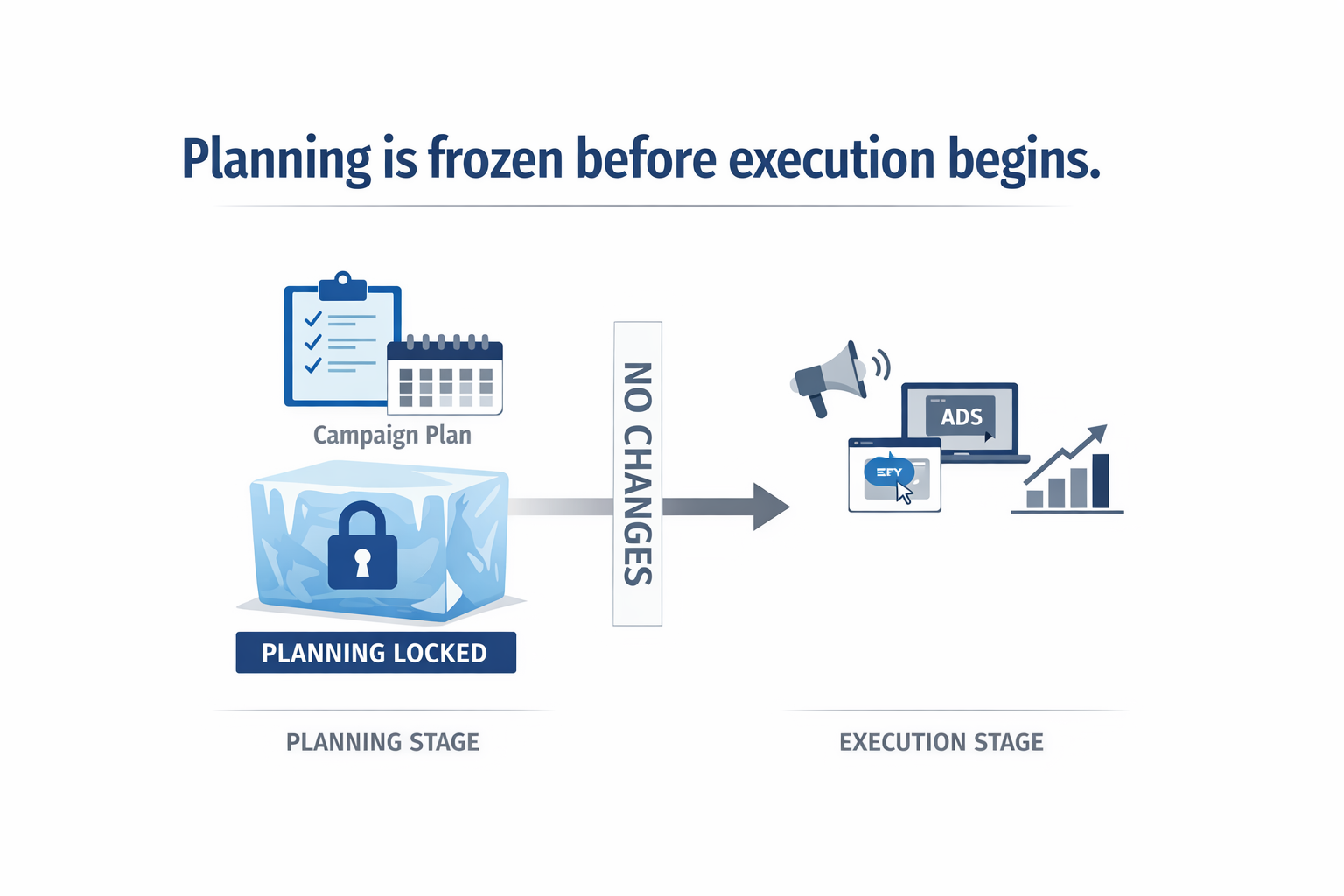
Most campaigns don’t fail during execution. They fail before execution even starts.
Not because teams are incompetent. Not because budgets are too small. Not because tools are missing. They fail because planning never actually ends. And when planning never ends, execution becomes chaos disguised as agility. Let me explain
The uncomfortable truth about modern campaigns
Today’s campaign workflow looks like this:
Strategy discussion
Rough plan
Budget estimation
“Let’s start, we’ll fix it as we go”
Execution begins
Feedback starts
Mid-campaign changes
March 28, 2026
Most people believe campaigns fail during execution. They don’t. They fail before execution begins — when planning decisions are informal, budgets are editable, and approvals are unclear. By the time ads go live, the real damage is already done:
Strategy has shifted quietly
Budgets have been adjusted without trace
Ownership is diluted
Accountability is retrospective
Execution platforms can’t fix this because execution is not the root problem. The root problem is decision integrity. If you cannot answer: – Who approved this? – On which version? – With what budget logic? – At what point in time?
Then you don’t have a campaign plan. You have a story written after the fact. Campaign planning is not a creative exercise. It is a governance function. And governance cannot be retrofitted after execution starts.
March 28, 2026
Everyone debates media mix. Search vs Social. Programmatic vs Direct. TV vs Digital. Performance vs Brand. Hours are spent optimizing percentages. Decks are filled with pie charts. Sophisticated tools model allocation scenarios down to decimal precision. But after watching enough campaigns unfold in real environments, one uncomfortable truth becomes clear:
Budget discipline matters more than media mix. Not slightly more. Fundamentally more.
The illusion of the perfect mix
A perfect media mix assumes something very fragile: That the budget it’s based on will remain stable. In theory, allocation looks elegant:
40% to performance
35% to brand video
15% to retargeting
10% to experimental channels
It feels strategic. Intentional. Balanced. But what actually happens in most campaigns?
Budget gets trimmed halfway through.
Funds are reallocated informally.
“Just a small shift” is made toward the channel that looks promising.
Leadership pressure alters priorities mid-flight.
External events force sudden changes.